Markt Square: the heart of the city
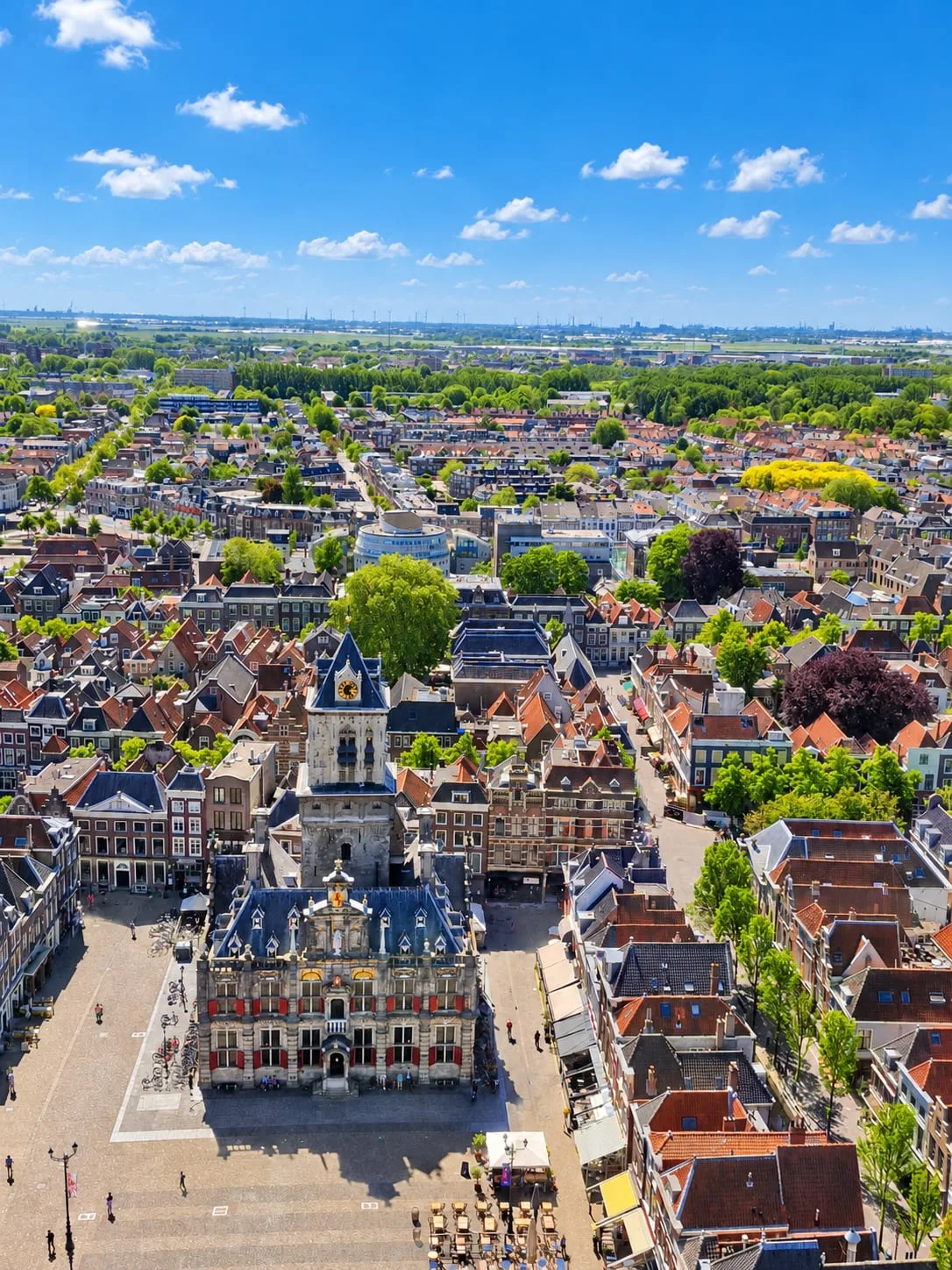
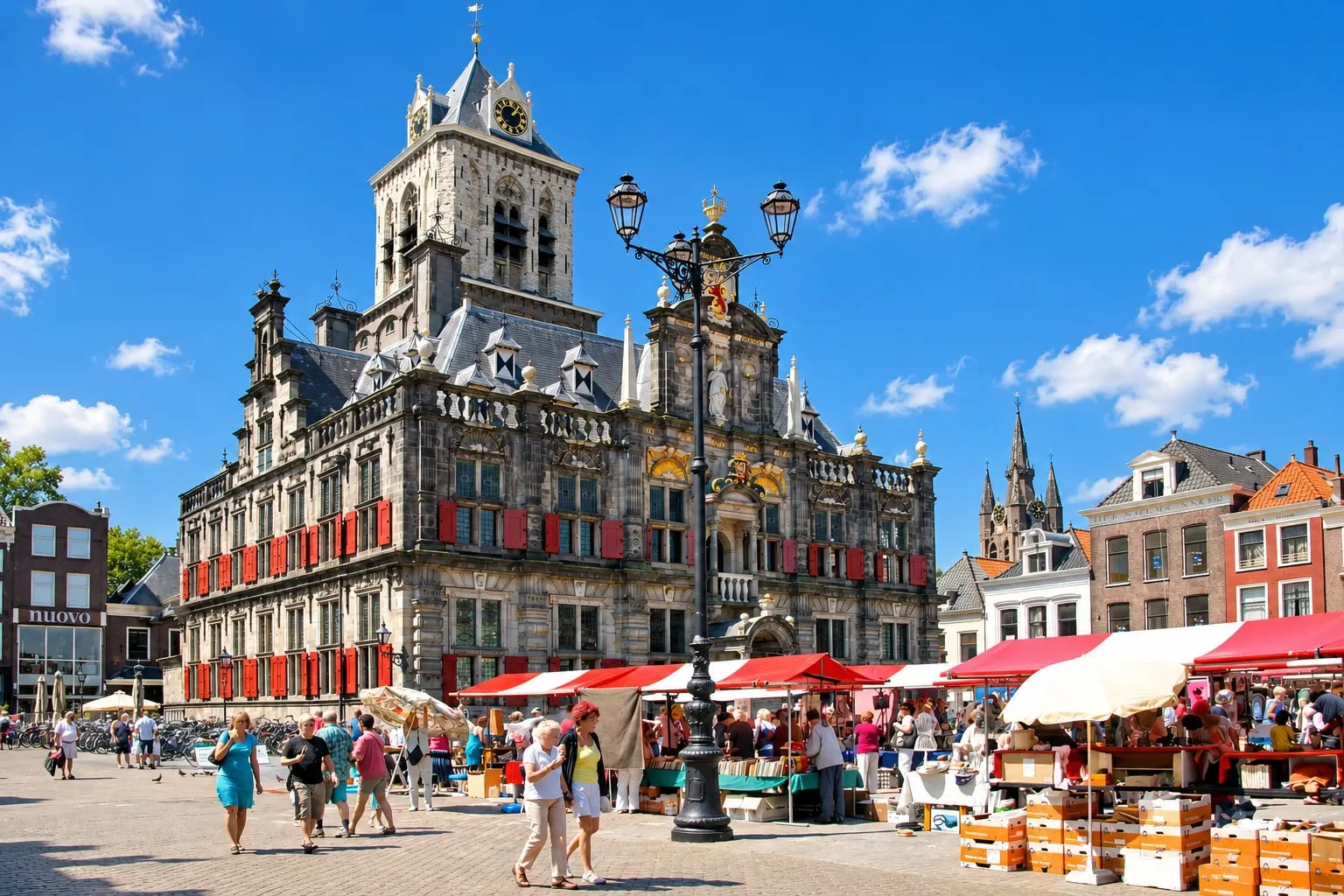
The heart of Delft is Markt Square. Work on it began as soon as the small settlement on the bank of the Delf canal received city rights, back in the thirteenth century. Here stands the legendary New Church, the final resting place of the father of the Dutch nation, William of Orange, and of all his noble descendants. Here a Town Hall of dazzling beauty was once built, still considered the most splendid in the Netherlands. And life still bustles here — tourists, cafés, little shops, museums, and of course the market at weekends.
How Delft Blue was born
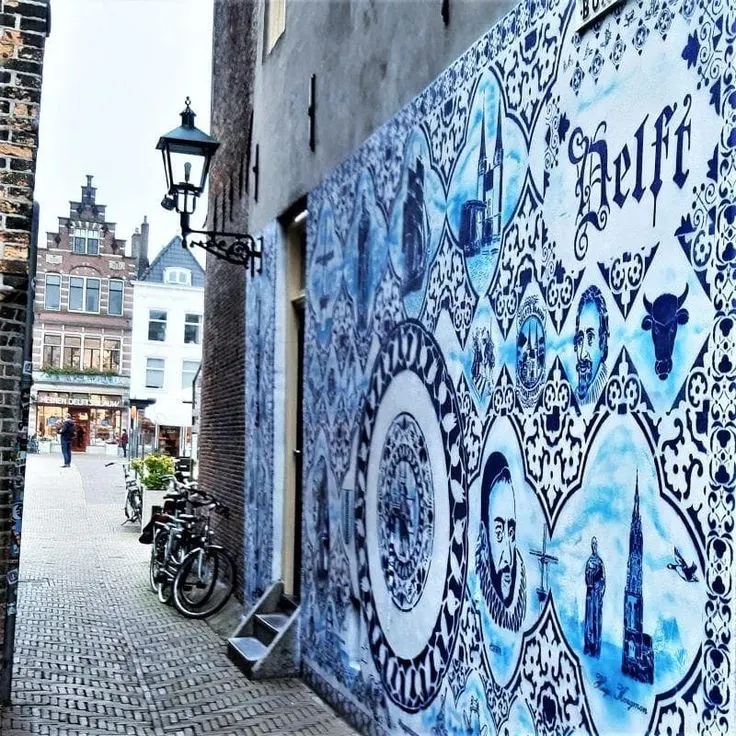
Once upon a time, a beautiful, wealthy and determined lady of Delft ran out of patience. She had ordered lavish Chinese porcelain, waited for it for long months, and when it finally arrived it turned out to be… not quite what she had imagined. Legend has it that it was her categorical dissatisfaction with the supplier that began the story of the famous Delft Blue — the blue-painted faience that became the town's calling card.
The Dutch Monte Cristo
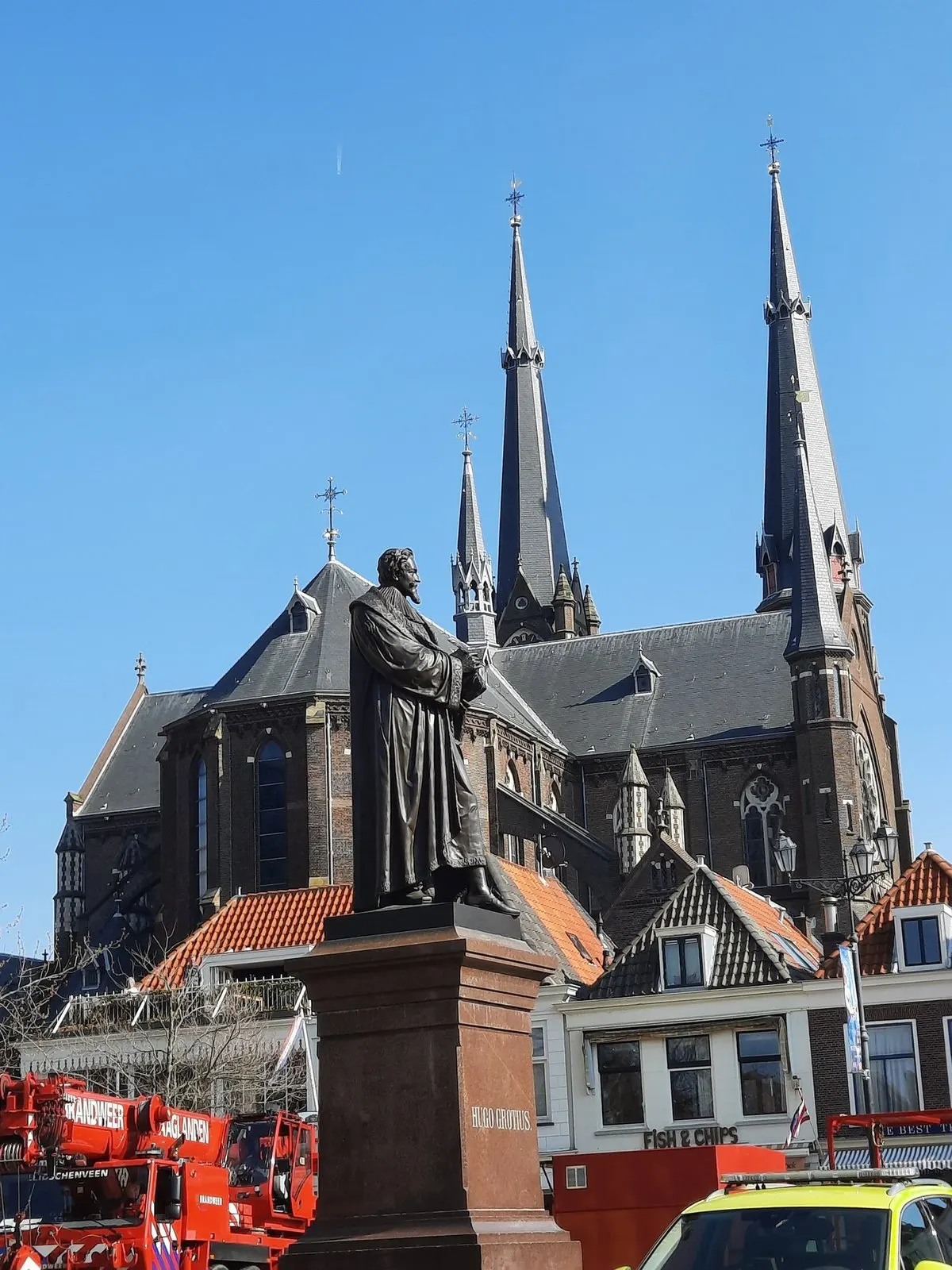
“The Count of Monte Cristo” — who has not read Alexandre Dumas's novel as a child? Its hero is imprisoned in a castle from which no one leaves alive — yet he manages it. And in Dutch history there is a real man who managed almost the same thing. This superman also founded international diplomacy, still studied at universities today. And he created laws that many countries around the world still use.
 AI illustration
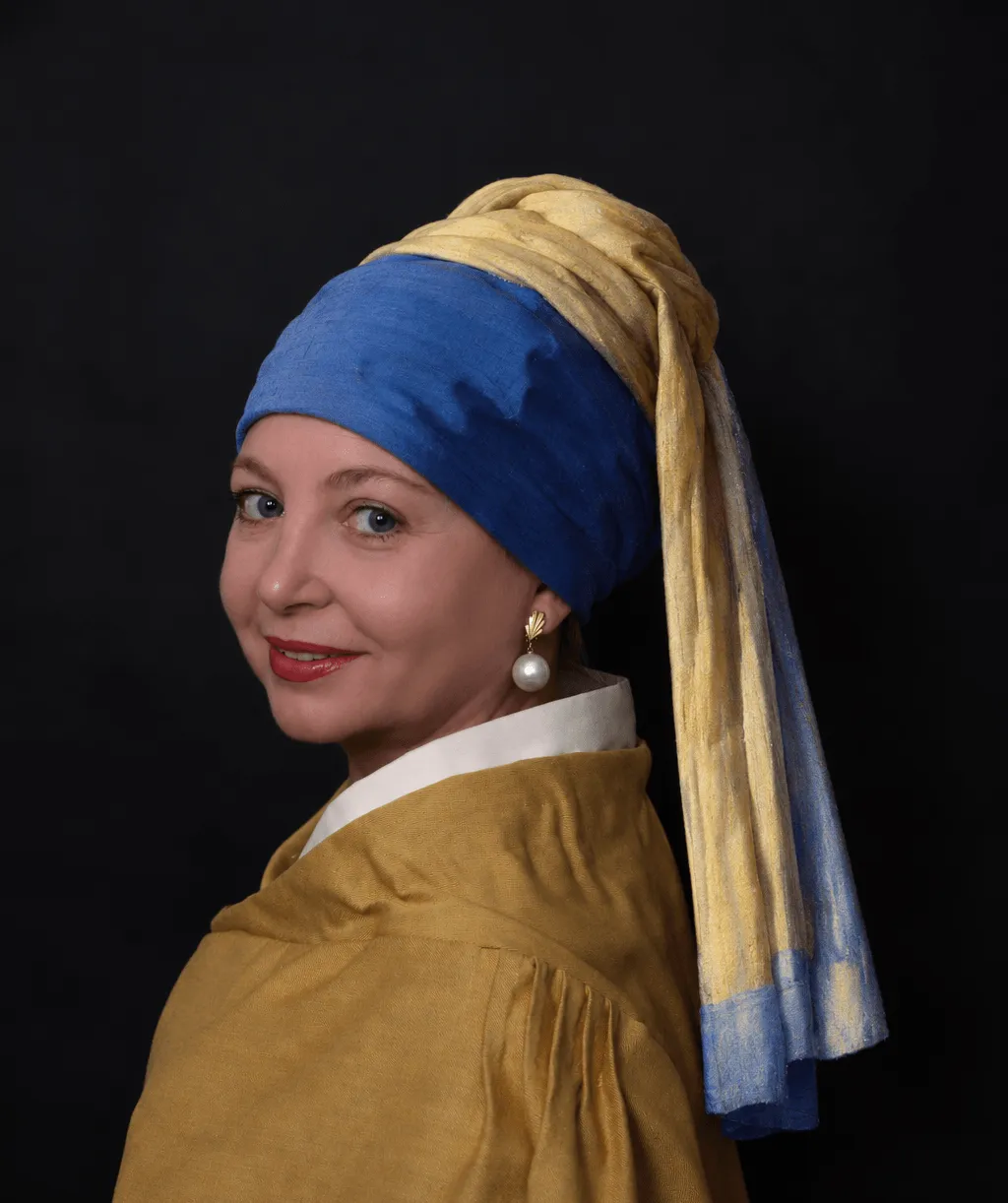
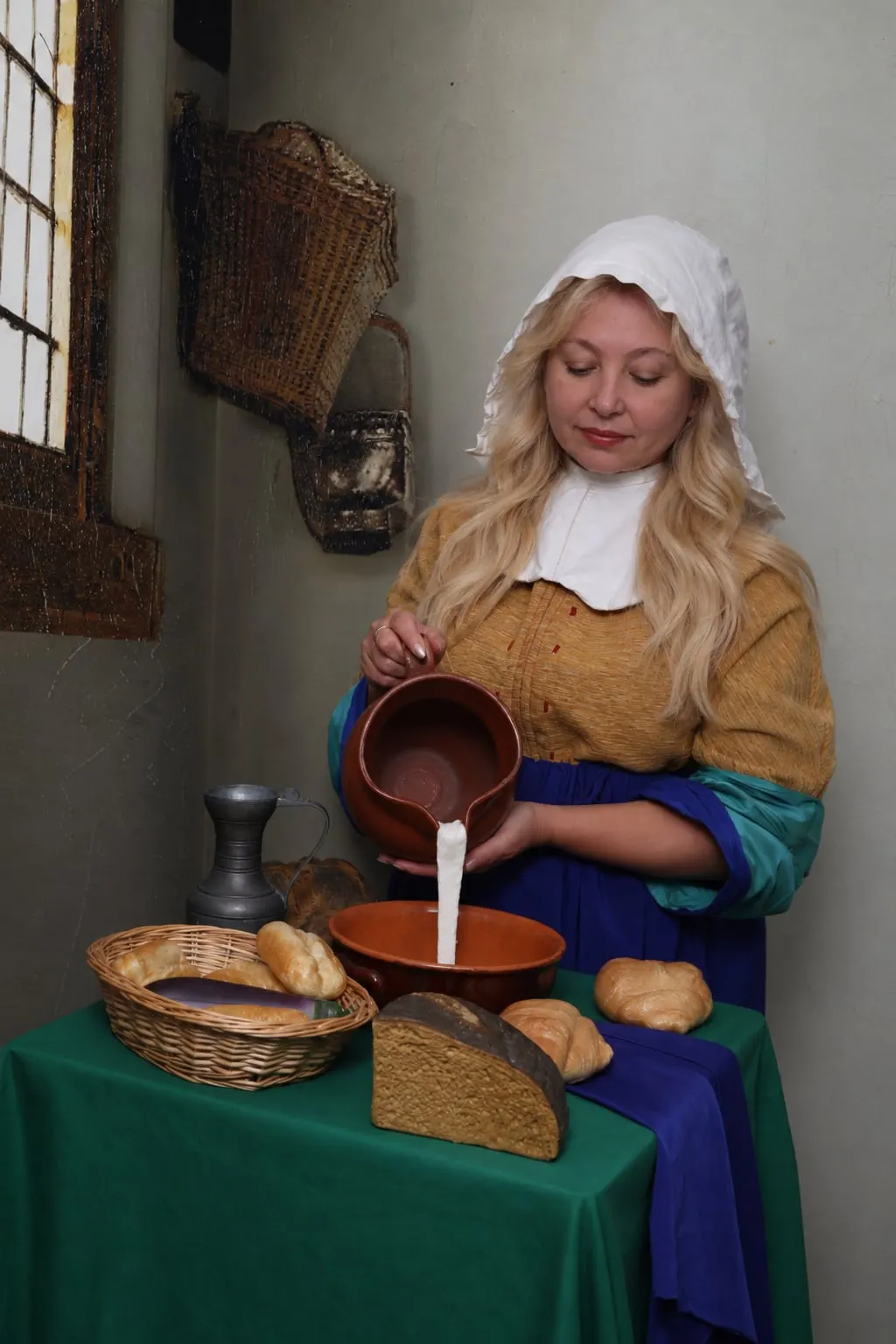
Vermeer, who never left
An icon of Dutch painting and the most enigmatic artist of the Golden Age, Johannes Vermeer was born in Delft and spent his whole life here. On Markt Square there once stood an inn owned by his father. And nearby was the building of the painters' guild, once headed by Vermeer himself — today his museum is there. I will try to lift the fog a little around this artist who left so few of his brilliant paintings… and dissolved into time for two hundred years. Until a man appeared who opened him to the world again.
The woman they have talked about for six centuries
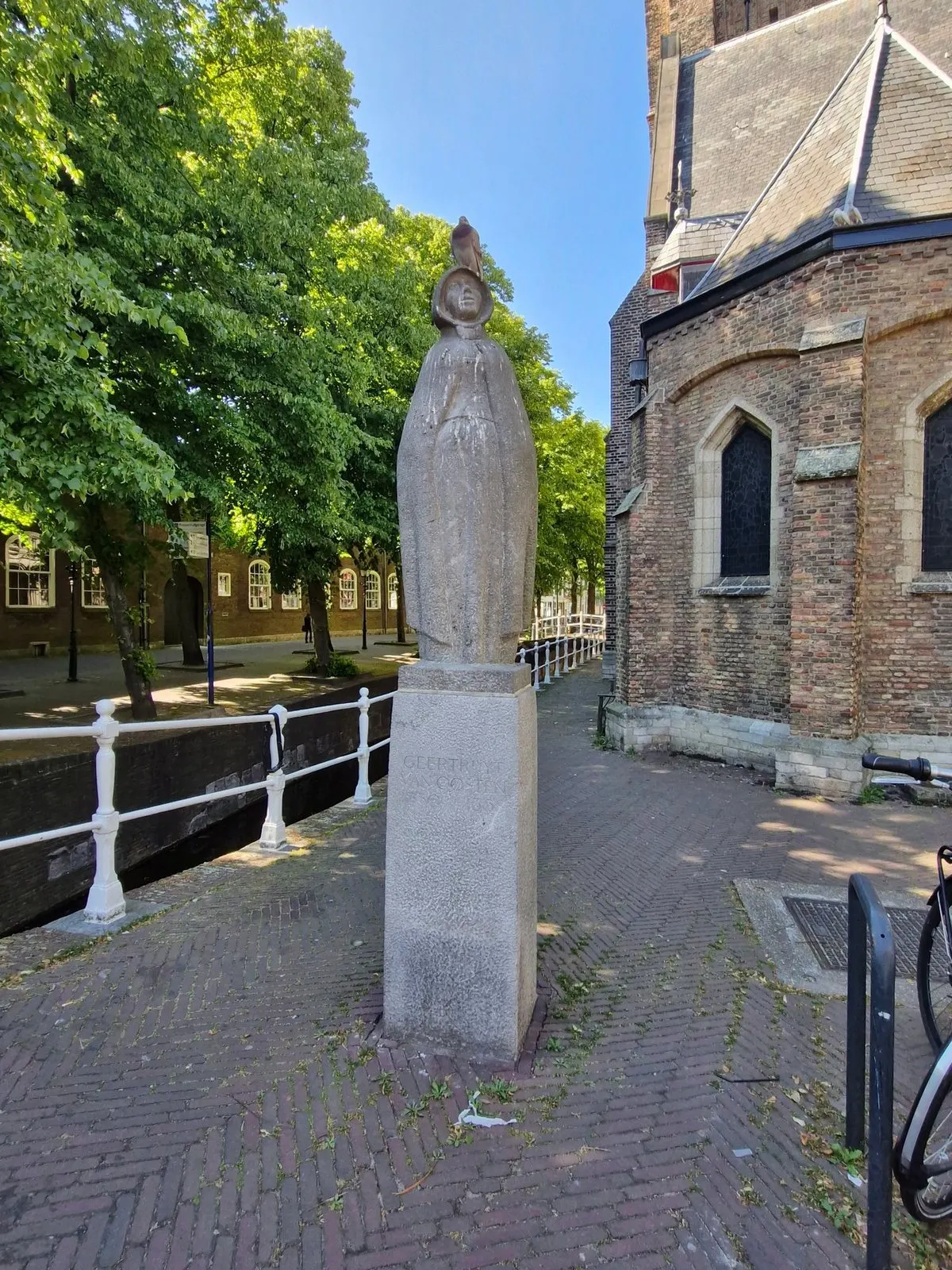
In the fourteenth century, in the town of Delft, there lived a woman. And of course she would not be as she ought: a respectable burgher's wife, a good housekeeper working modestly and diligently and dutifully attending church on Sundays and feast days. But no: Geertruide was not like that. Geertruide was a star, and she simply could not do without the public's excessive attention. That is precisely why her monument adorns the square beside the Old Church, and the curiosity and attention of her beloved public has not faded for six centuries. So who was she?
Delft's own leaning tower
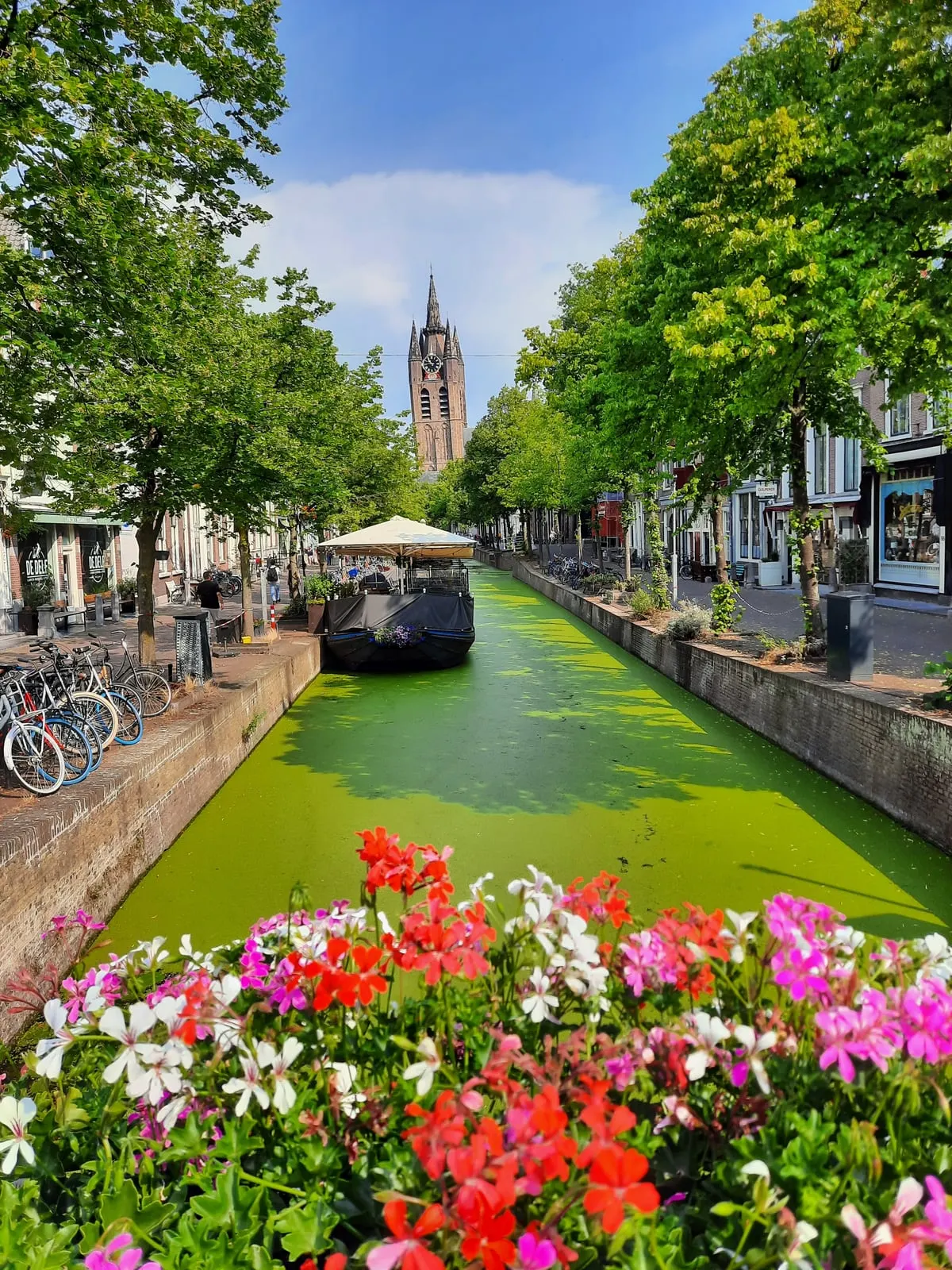
Delft has its own “Leaning Tower”. And a strange one at that: it seems to lean… and it also seems that it only seems to lean, while in fact it does not :) What is this tower, when did it appear, and what creates this elusive, ethereal illusion? You will not believe it, but in the Netherlands it is always so: the most mysterious and most romantic phenomena are explained by purely practical causes :)
Van Leeuwenhoek and the first microscope
The only member of the Royal Society of London without a university education, Antonie van Leeuwenhoek, was also a citizen of Delft. He lived a long, interesting, full, respected and happy life, and did not waste the time given to him. It was Van Leeuwenhoek who created the first microscope. Its magnification was so powerful that it allowed its creator to see something entirely new and unexpected — but did he understand what exactly?
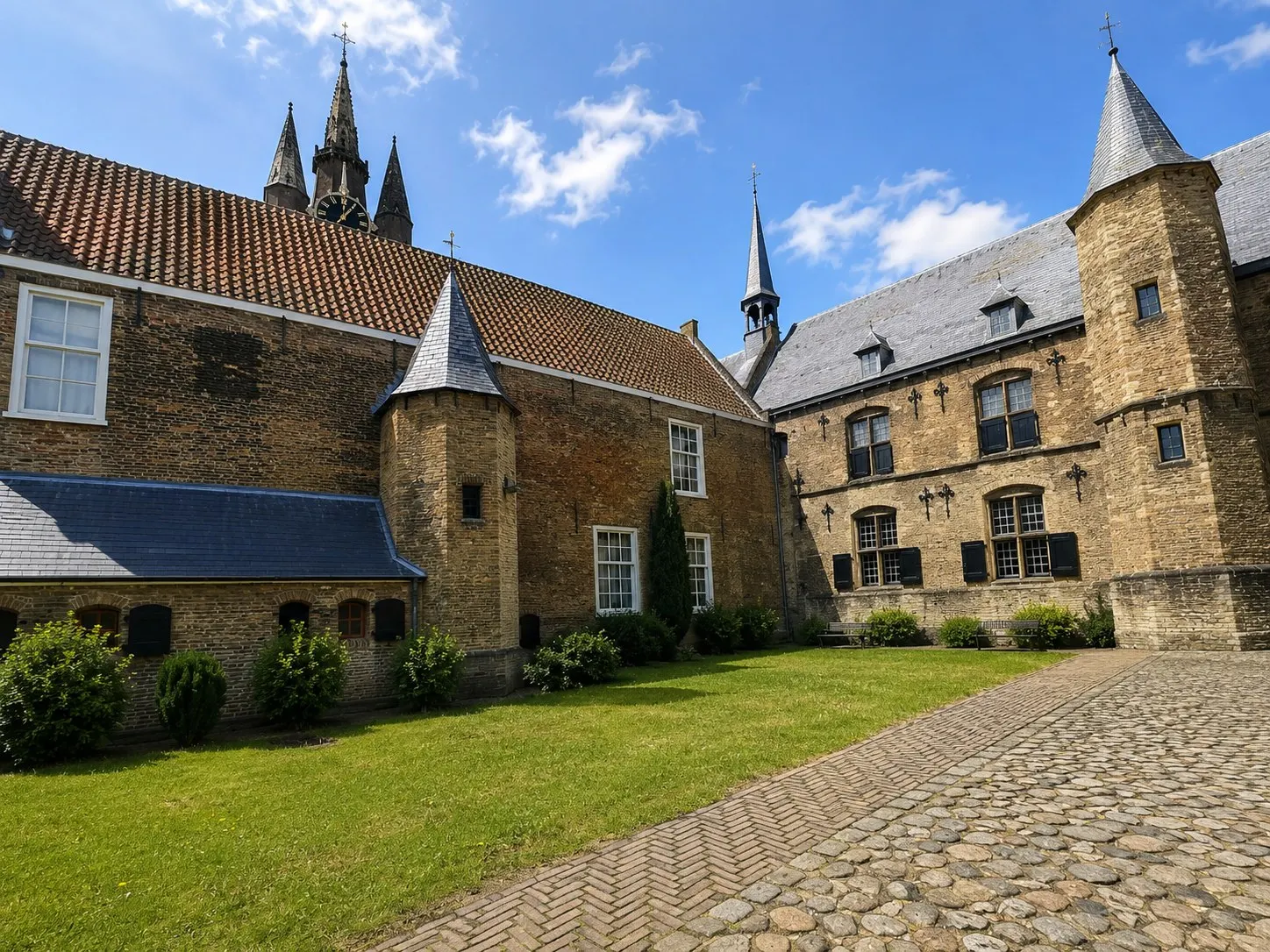
The monastery where the father of the nation was shot
At the end of the sixteenth century, within the walls of this medieval monastery, a tragedy occurred that almost cost the Netherlands its statehood: here an attempt was made on the life of the man without whom the country of the Netherlands might never have come into being — at least not as we know it now. How did it happen, why here, who was the killer, and what came afterwards?
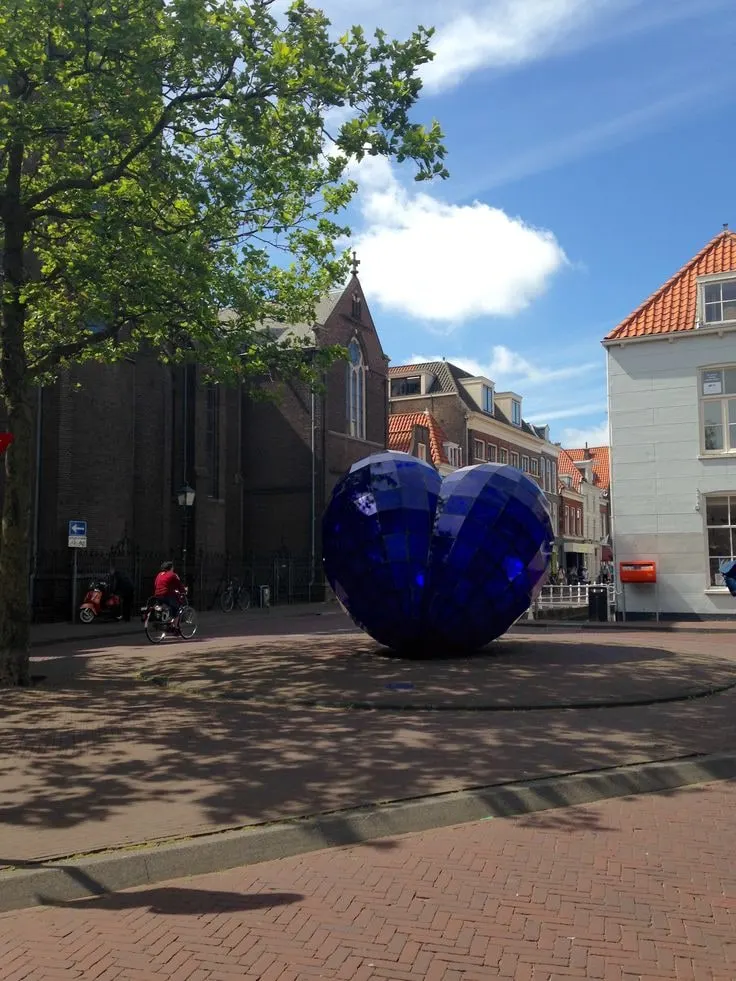
Delft today
In Delft every stone can tell stories like Scheherazade, for a thousand and one nights. But history is not everything. Delft is a town that has found its place in the modern world. And what exactly that place is, local artists have tried to tell us by artistic means, in sculpture among others. What do the artists themselves see in this sculpture, what do the locals see, and what idea does this work carry? :)

.eK8hKoik_Z1i9rEy.webp)